
Рівненський обласний благодійний фонд «Наше Майбутнє»
Rivne Regional Charity Foundation “Our Future”






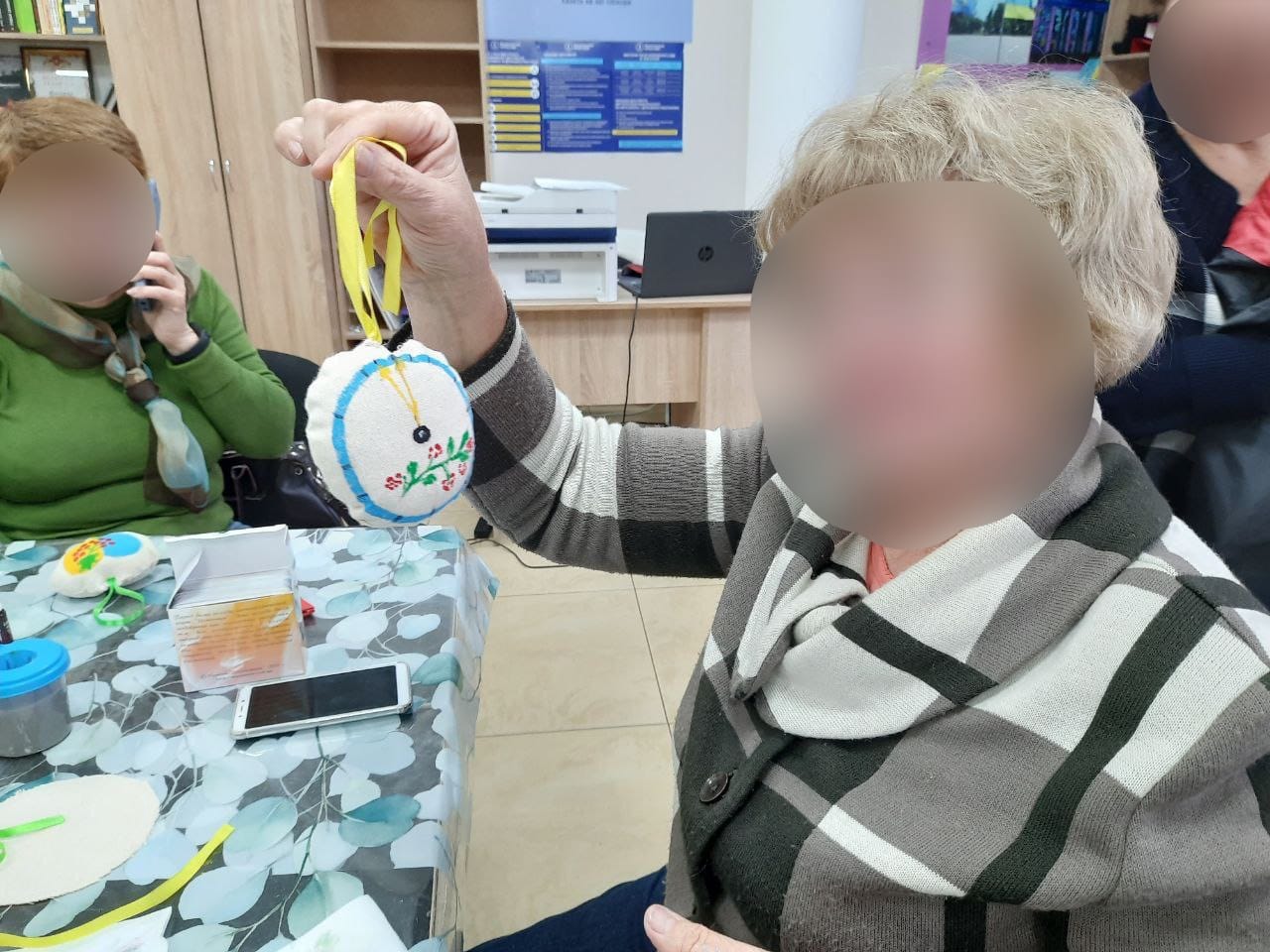

Svitlana and her 94-year-old mother currently live in Obariv, Rivne region. The house where they reside was provided by compassionate locals when they arrived from Mariupol. Svitlana speaks of her hometown with nostalgia and sadness — it was where she had a happy life.
“Together with my husband, we built a house and raised two sons. My husband passed away. The children grew up. Just before the war, I stayed with my mother, who was ill and could barely move,” the woman recalls.
Neighbors helped them leave Mariupol. Svitlana not only left her home but also her beloved occupation — growing flowers, which not only brought her joy but also helped earn some income.
Here in Obariv, the stress and shelling have affected the women’s health, particularly Svitlana’s mother, whose memory has almost completely deteriorated and who requires constant care and medical attention. Although they receive a pension, their living conditions are modest, so the assistance they received through the Rivne Regional Charitable Foundation Our Future was extremely timely and necessary. Thanks to the project “Integrated Humanitarian Response during War and Post-War Recovery”, Svitlana was able to purchase medicine and treat herself and her mother to some holiday treats.
Svitlana is convinced that the kindness of people will return a hundredfold, and with the support she received, she has found the strength and motivation to return to her beloved activity — growing flowers.
In Ukraine, the project “Integrated Humanitarian Response during War and Post-War Recovery” is implemented with financial support from the Disasters Emergency Committee (DEC), United Kingdom. The project, aimed at supporting communities by addressing urgent humanitarian, social, and medical needs and ensuring a dignified life in crisis conditions, is carried out by the Rivne Regional Charitable Foundation Our Future with technical support from Christian Aid and coordination by the International Charitable Foundation Alliance for Public Health.© 2012-2026.Рівненський обласний благодійний фонд «Наше Майбутнє» Rivne Regional Charity Foundation “Our Future”. Всі права захищені.